Defect identification and removal
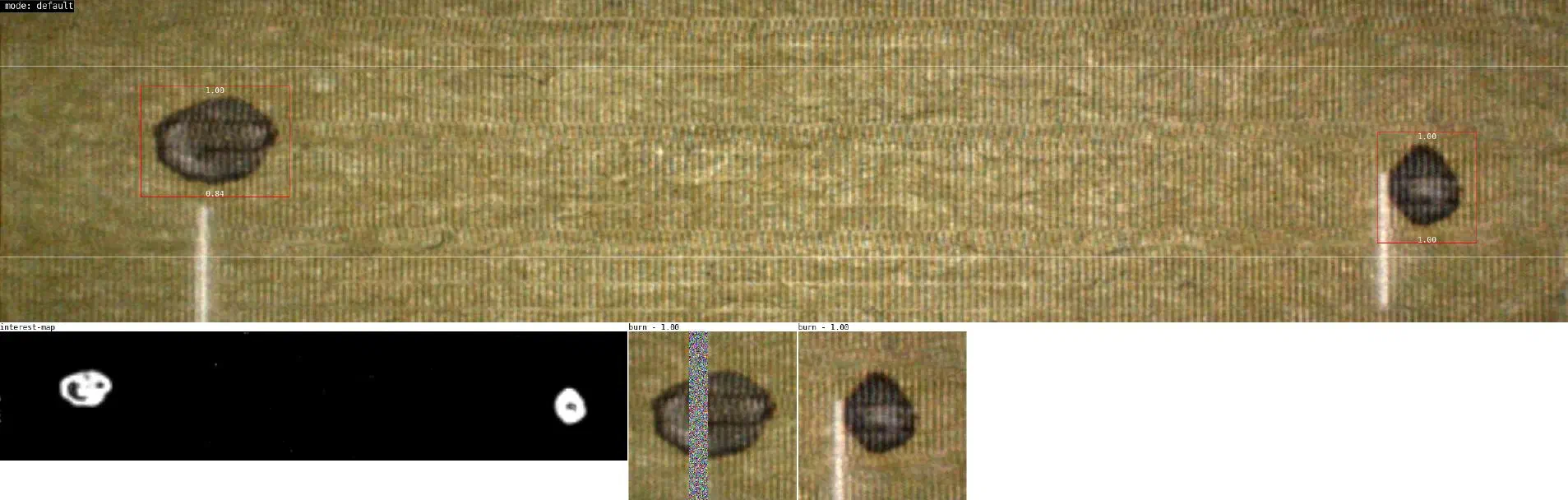
A system developed to automatically detect defects visible on the surface of material as it is produced on a moving conveyor, using controlled illumination and machine vision analysis to provide a non-contact and automated alternative to manual inspection - resulting in a reduction of material wastage compared to manual operation.
Problem
A production line employed line operators, standing alongside the line, to observe items on the line and check them for visible defects. On spotting a defect that the operator considered to be too significant, they would manually trigger rejection machinery to remove the item containing the defect. The job was boring and difficult to standardise, relying on snap judgement of features moving rapidly past the line operator. Defects positioned such that they were harder for the operator to see would sometimes be missed, as would defects passing when the Operator’s attention was diverted.
Due to the manual nature of the task, defects could only be rejected late in the production process after material had already been formed into final products - so substantial quantities of good material would be rejected in a final item alongside a relatively small defective area.
Solution
Emergent Design installed a system to detect areas of the material surface which present an unusual appearance, leveraging controlled lighting and calibrated machine vision cameras to resolve the location of these unusual regions to a precise real-world position with immunity to ambient light variation.
By employing a trained AI classifier network on each of these anomalous regions, the nature of each could be determined. With each anomaly assigned either a defect type or classified as non-defective, size and severity thresholds can then be applied to decide on a course of action appropriate to the quality requirements of the items being produced - whether to accept, reject or raise a warning to operators that process drift may be occurring.
The analysis now occurs earlier in the process and generates the precise location and extent of detected defects, allowing these regions to be cut from the material stream prior to item formation. This dramatically reduces the volume of wasted material as well as reducing manning costs by taking over a demanding but tedious job.